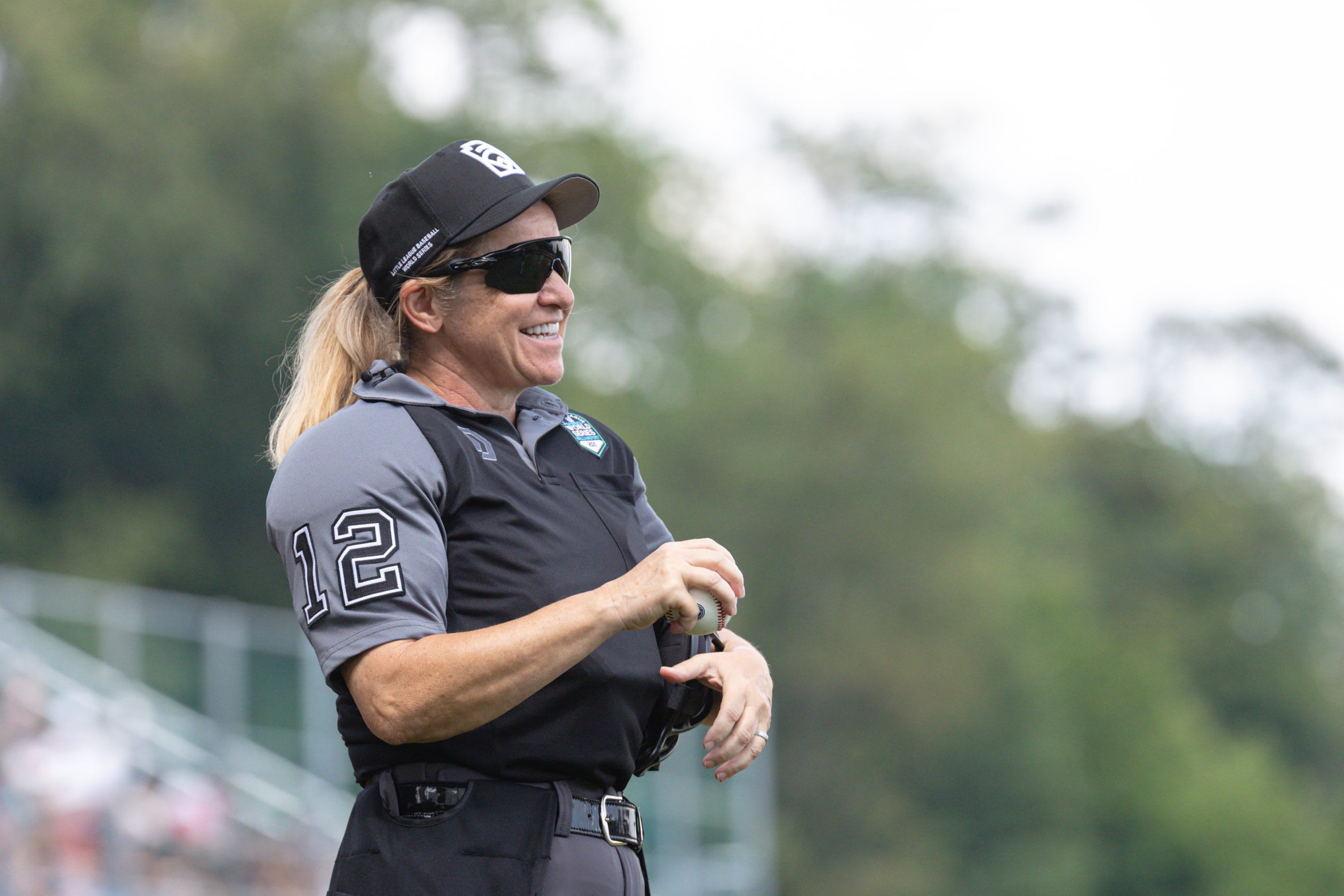
Volunteerism is at the core of the Little League® program, but beyond the need for coaches and managers, it’s the recruitment of new umpires and retaining umpires from previous seasons that help make every game possible.
Umpires are a key component that allows Little League to run its course. They ensure fairness, sportsmanship, and integrity in every single game, all while doing their best to make the right call. Despite this, leagues nationwide struggle to find and retain dedicated officials. From training new volunteers to starting junior umpire programs, and making the experience as memorable as it can possibly be to make sure umpires return year after year, local leagues are getting creative in their efforts.
To learn more about some of the successes in recruiting and retaining umpires by local leagues, Little League sat down for a “Full-Count Conversation” with Umpires-In-Chief, Darren Oliver from Barrier Islands LL (Johns Island, S.C.), Mike Azzarello from Freehold Township (N.J.) LL, and Jeremy Calhoon from Martinez (Calif.) LL.
1-0 Count: What successful ways have you been able to recruit your umpires?
Michael Azzarello (MA): “When it comes to recruitment for umpiring, what I found to be most successful is utilizing the current umpires to encourage new ones and presenting to them the benefits of becoming an umpire. It is important for them to understand that while they may begin at the youth level, there is a defined pathway for growth. Umpiring is not just a side opportunity, it can develop into a meanigul long term role, and even a career for those who want it to be. A big part of recruitment is education. We make sure players understand what the progression looks like, what levels they can reach, and how umpiring allows them to stay connected to the game long after their playing days are over. When they see that bigger picture, they are much more open to getting started.”
Jeremy Calhoon (JC): “A big part of our recruitment efforts is through social media and word of mouth. For junior umpires, word of mouth and seeing their friends work games as umpires has been a huge bonus for us. Tons of the junior umpires see their friends involved and come to me asking how they can do the same. It’s a really nice domino effect for us recruiting and retaining new umpires that are passionate about the program.”

1-1 Count: What kind of training and preparation do you provide for new and returning umpires?
MA: “Before each season, we provide a structured training program that includes both classroom instruction and on-field development for new recruits, as well as returning umpires who want to continue to improve. This year, we partnered with neighboring districts to host a three-night Zoom series focused on rules, mechanics, and rule interpretations. That allowed us to create consistency across districts and give our umpires direct access to experienced officials.”
Darren Oliver (DO): “Before the season starts, we’ll kick off a whole training cycle for our volunteers. We usually start the first week of August, so they’re prepared for Fall Ball, and we’ll spend every Sunday either on the field itself or going through the Little League Rule Book and taking them through different situations. Our on-field training lasts three to four hours. During those trainings, we start throwing live balls at them with runners and make it as live action as possible. Once the fall season starts, we throw them into the action, and they umpire games. In the off-season, we make it a priority for them not to lose their skills. In the month of January, I host weekly two-hour plate drills, and we go over basic commands, like how to call an uncaught third strike, check-swings, infield fly balls, and really anything else you can think of. As they improve and want to move up the ranks, they practice behind a 70 MPH pitching machine so they can get better at seeing the ball come across the plate.”
JC: “We have both Zoom and in-person clinics and strongly urge both new and returning individuals to attend those. We are also very blessed to have quite a few very experienced umpires, plus a recent rush of newer umpires, as well. Each group needs different levels of training, especially for the newer, younger, less experienced set. A lot of it is on-the-job training. I’ll work with them, or I’ll have another seasoned umpire partner with them to give them prep before each game. Also, if it’s timely, we give feedback between innings and after every game. Being transparent with our umpires, specifically the juniors, allows them to grow not only their umpiring skills, but leadership skills as well.”


NOTE: In addition to the local trainings provided by these leagues, Little League offers a free “Umpire Training Course” available online at LittleLeague.org/Training.
2-1 Count: What steps does your league take to retain your umpires?
MA: “Keeping them engaged, working with them, providing them positive feedback, steps on how to improve, and giving them avenues and training opportunities that are outside of Little League. We work very closely with them, whether it be through written evaluations or oral evaluations. It is always a positive way to engage with them and keep them in the program.”
JC: “As far as retention goes, we really focus on empowering the umpires and making it a great experience for them. A result of that is a lot of word of mouth to bring new individuals into the program. A big part of our retention also comes from our work on social media. With the umpire’s permission, we’ll take photos, shout them out, and pump them up. Plus, it is also a bit of an advertisement to get new umpires. We always mention that we are looking for umpires at all the important meetings, but the goal is to really make the program as fantastic as possible, so not only will umpires stay, but it will naturally attract more as well.”
2-2 Count: If challenges came up, how do you defend or support by your umpires from verbal/and or physical abuse?
MA: “When challenges arise, our priority is supporting the umpire. We speak to them to review what happened, break down the situation, and talk through how it was handled. If there was a missed call or a difficult moment, we use it as a teaching opportunity and provide the tools they need to manage similar situations in the future. Honest, constructive conversation is an important part of growth.”
DO: “I pay close attention day in and day out. Luckily, we only have two to three fields, so I am always bopping around from field to field to make sure everything is running smoothly. However, when it comes to junior umpires, we have game coordinators whose sole purpose is to defend the umpire. If there is ever a play in question or a parent or coach gets out of hand, the game coordinator, who is someone on our local league board, will come out and step onto the field and take care of the situation. It is a highly respected position.”
3-2 Count: What makes your league unique when it comes to umpires?
MA: “What sets our league apart is the ongoing support and development we provide for our umpires. We focus on practical training using real-game scenarios to help them improve not just as officials, but as mentors and leaders on the field. We maintain an open-door policy so umpires can reach out to discuss any situations or questions that arise during their games. Additionally, we host a parent and coach orientation where umpires explain the rules and answer questions. This not only educates the community but also gives our umpires a chance to build confidence and authority in a supportive environment.” It also allows our parents a way of educating themselves and having questions answered. Although it may not change the outcome of that specific play at the time, everyone can learn from it.”
DO: “Our league is very proud of our junior umpire program. We take it very seriously, and we’re so proud of the way our junior umpires can handle themselves. They know the rules, and nine times out of ten, they don’t need an adult to step in. I tell them all the time to feel free to tell a coach to go back to his dugout. For a teenager to be comfortable enough to do that, that’s pretty cool. We defend them to the fullest extent. If they are wrong about a call or a situation, we won’t call them out during the game. Instead, we always have a postgame wrap-up and talk about different plays and parts of the game where they could grow. It’s just a great working relationship where we’re all working towards the same goal.”
JC: “We have a lot of fun. Depending on the person’s availability, we’ll meet up an hour before the game to plan that game’s responsibilities and roles, and then we just have some chit-chat and bond. But, after the game, the umpire debriefs can run 30-45 minutes, not only talking about the game and improvements, but also enjoying each other’s company, laughing, and having fun, too. They’re proud of the work they do and are always excited to come back for another game. It’s rewarding to watch.”
Looking to step up to the plate and be an umpire this season? Visit LittleLeague.org/Umpire to learn more and find a league near you. Also, don’t forget to shop for all your umpire polos, caps, and accessories by visiting ShopLittleLeague.org.